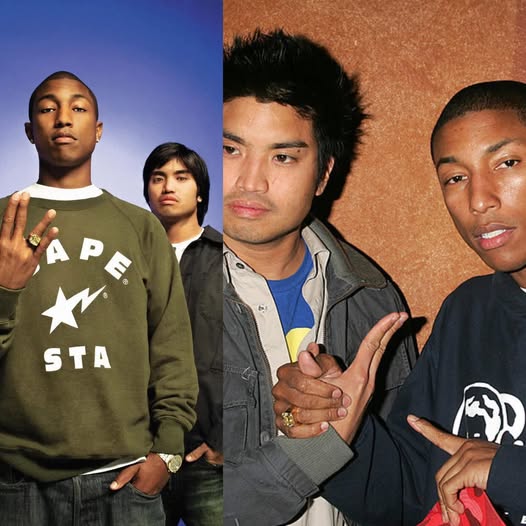
A ccording to court filings, Hugo alleges that Williams failed to pay him his rightful share of income generated through The Neptunes and the group N.E.R.D., including revenue from album sales, touring, and merchandising. The lawsuit claims Hugo is owed hundreds of thousands of dollars, with potential damages ranging from $750,000 to more than $1 million.
At the center of the dispute is N.E.R.D. Music, LLC, a company formed in 2014 by Williams, Hugo, and third member Sheldon “Shay” Haley. Under the operating agreement, Williams was responsible for managing and disclosing financial information related to the company. The agreement reportedly stipulates that Williams receives 50% of touring and related income, while Hugo and Haley receive 25% each, with merchandising and trademark income split evenly among all three.
Hugo claims that since 2021, he has repeatedly requested access to financial records — including income, expenses, and royalty statements — but was either ignored or provided with incomplete disclosures. His legal team argues that this failure constitutes a breach of the operating agreement.
The lawsuit further alleges that Hugo has not received his proper share of royalties tied to The Neptunes’ production catalog or N.E.R.D.’s releases. As supporting evidence, Hugo claims that numerous songs are missing from his label and SoundExchange portals, suggesting unpaid or unreported earnings.
One of the most significant claims relates to N.E.R.D.’s 2017 album No One Ever Really Dies. Hugo estimates he is owed at least $325,000 from that project alone, with total unpaid earnings from the album possibly exceeding $1 million.
Hugo and Williams met in Virginia Beach in the late 1980s and began working together in the early 1990s, later becoming one of the most influential production teams in modern music. As The Neptunes — and later through N.E.R.D. — they shaped the sound of pop and hip-hop with a catalog of chart-topping hits spanning decades.
Williams has not publicly responded to the lawsuit at the time of publication.
The case adds to a growing list of high-profile legal disputes over music royalties and creative partnerships, raising fresh questions about transparency, control, and accountability in long-running artist collaborations.
This is a developing story.
Comments
Leave a Comment
No comments yet. Be the first to share your thoughts!